Pallet Racking System Singapore: Types, Benefits & Complete Buying Guide
For any Singapore warehouse, the right pallet racking system is not simply a matter of convenience; it is the structural backbone of efficient, safe, and scalable operations. Without it, businesses struggle with floor congestion, slow picking speeds, forklift conflicts, and exposure to Ministry of Manpower (MOM) Workplace Safety and Health (WSH) requirements that carry significant penalties.
This guide covers everything you need to know about pallet racking system in Singapore: the main system types, key benefits, safety obligations, and how to choose and price the right solution for your warehouse.
What Is a Pallet Racking System?
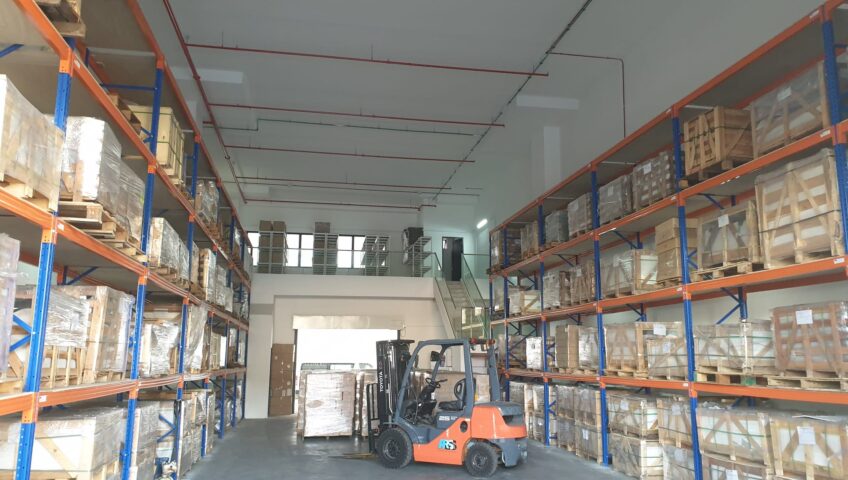
A pallet racking system is a heavy duty racking structure engineered to convert underused ceiling height into productive pallet positions. Unlike commercial shelving, which handles lighter, hand-picked items, pallet racking is built for loads measured in tonnes, accessed by counterbalance forklifts, reach trucks, or specialised material handling equipment (MHE).
In Singapore warehouses, load capacities typically range from 1,000 kg to 4,000 kg per beam level, with total bay capacities of 8T–15T depending on configuration.
Standard configurations span heights from 1,200 mm to 12,000 mm, accommodating everything from JTC flatted factories (typically 3.5–4.2 m clear height) to large logistics hubs (8–12 m and above). Beam lengths range from 1,350 mm to 3,600 mm, and a 50 mm upright perforation pitch allows beam heights to be adjusted at any time as inventory needs evolve.
What Are the Main Types of Pallet Racking Systems in Singapore?
Selective Pallet Racking
The most widely used industrial racking system in Singapore, selective pallet racking gives direct aisle access to every individual pallet position without disturbing adjacent stock. It is fully adjustable, compatible with standard forklifts, and offers the lowest upfront cost of any racking type, making it the default choice for most SME warehouses.
Best for: High-SKU-variety operations, fast-moving goods, and FIFO stock rotation.
Very Narrow Aisle (VNA) Racking
VNA racking is a compact, high-density alternative to selective racking, engineered for specialist turret trucks that operate in aisles as narrow as 1,500–1,800 mm, roughly half the width required by a standard counterbalance forklift. Crucially, every pallet position remains individually accessible, so selectivity is not sacrificed for density.
Best for: Warehouses facing space constraints that need to expand storage capacity without relocating or expanding the building footprint.
Double Deep Racking
Double deep racking places two selective racks back-to-back, storing pallets two positions deep per bay. This delivers approximately 40% more pallet positions compared to standard selective racking within the same footprint and requires fewer aisles at the cost of needing a deep-reach forklift to access the rear pallets.
Best for: Operations carrying two pallets per SKU (one active, one in reserve); medium-density storage without the structural complexity of drive-in systems.
Drive-In / Drive-Through Racking
In a drive-in or drive-through system, forklifts enter the racking lane itself to place and retrieve pallets, which rest on continuous horizontal rails rather than conventional beams. Drive-in configurations use a single entry and exit point (last-in, first-out / LIFO); drive-through configurations allow entry at one end and exit at the other (first-in, first-out / FIFO).
Best for: Bulk storage of homogeneous, non-perishable goods (drive-in/LIFO); perishables or time-sensitive products requiring strict stock rotation (drive-through/FIFO).
Push Back Racking
Push back racking is a gravity-fed LIFO system using inclined rails and nested wheeled carts. Each new pallet loaded at the front physically pushes the existing pallets backwards; when the front pallet is removed, gravity rolls the remaining pallets forward automatically. Unlike drive-in racking, forklifts never enter the structure.
Best for: Medium-to-high density operations requiring better selectivity than drive-in (each lane holds a different SKU); cold storage environments where gravity-fed mechanics eliminate the need for powered components.
At a Glance: Racking Type Comparison
| System | Storage Density | Selectivity | Forklift Required | Best For |
| Selective | Low–Medium | 100% | Counterbalance / Reach truck | High-SKU, fast-moving |
| VNA | High | 100% | VNA turret truck | Space-constrained warehouses |
| Double Deep | Medium | ~50% | Deep-reach truck | Two pallets per SKU |
| Drive-In / Through | Very High | Very Low | Counterbalance | Bulk, single-SKU storage |
| Push Back | High | Per lane | Counterbalance | Medium-density, mixed SKUs |
Use this table as a starting point; your final selection will depend on pallet size, ceiling height, forklift type, and budget, all covered in the buying guide below.
What Are the Key Benefits of Pallet Racking?
Vertical Space Maximisation
Pallet racking fully utilises available ceiling height from the 3.5 m clear of a JTC-flatted factory to the 12 m of a modern logistics hub, multiplying the number of pallet positions per square metre without any need to expand the building footprint. For Singapore businesses operating in high-cost industrial space, this vertical efficiency directly reduces the cost per pallet stored.
Forklift and MHE Compatibility
Pallet racking systems are engineered to integrate with the equipment your warehouse already operates, whether standard counterbalance forklifts, extended-reach trucks, or specialist VNA turret trucks. This means you are not forced to invest in new machinery simply to adopt a racking system; the right solution is specified around your existing fleet.
Scalable and Reconfigurable Layouts
The standard 50 mm upright perforation pitch allows beam heights to be raised or lowered quickly with basic tools, adapting to new pallet profiles or product ranges without replacing frames. Additional bays can be bolted on as your operation grows, making pallet racking a long-term infrastructure investment rather than a fixed, one-off cost.
Improved Inventory Organisation
Assigning dedicated pallet positions by SKU eliminates the guesswork from picking, reduces misplacements, and supports structured FIFO or LIFO stock rotation. When every pallet has a defined location, stocktakes are faster, and inventory accuracy improves, reducing write-offs and overstock.
Increased Employee Productivity
Organised, clearly labelled racking reduces the time warehouse staff spend searching for stock, navigating congested aisles, or waiting for access. Streamlined picking workflows across every shift translate directly into higher throughput, fewer errors, and a safer working environment.
What Safety Standards Apply to Pallet Racking in Singapore?
The WSH Act 2006 is the primary legislation governing warehouse racking safety in Singapore. MOM’s “Safe Use of Storage Racks” regulation provides specific operational requirements, and the WSH (Risk Management) Regulations mandate that a documented risk assessment is conducted before any racking system is put into operation.
Floor Anchoring
All racking baseplates must be firmly anchored to the warehouse floor using properly torqued anchor bolts. No cracking, deformation, or concrete spalling at anchor points is permissible, and any signs of movement or loosening must be rectified immediately. This is a non-negotiable baseline requirement under MOM’s racking guidance, regardless of system type or load rating.
Load Signage
Safe Working Load (SWL) placards are mandatory on every rack bay, clearly displaying the maximum load per beam level and the total bay capacity. SCDF additionally requires signage indicating the maximum permissible storage height to maintain the required clearance below sprinkler heads. Failure to comply can void fire insurance and trigger stop-work orders.
Column Guards and End-of-Aisle Barriers
In any warehouse where forklifts operate in the vicinity of racking, column guards and end-of-aisle barriers are strongly recommended and in practice treated as a standard requirement by MOM inspectors. These protective fittings absorb low-speed forklift impacts, preventing upright frame damage that could compromise the structural integrity of an entire rack run.
Inspection Schedule
Racking must be inspected at four intervals: daily visual checks by warehouse operatives; weekly structured assessments documented by a safety supervisor; monthly comprehensive reviews by the warehouse manager; and an annual professional inspection by a qualified rack safety inspector or a registered professional engineer (PE). The annual inspection provides the formal certification of structural integrity that MOM enforcement expects.
Standard freestanding pallet racking does not require a building permit. However, mezzanine floors and rack-supported platforms do require a BCA permit and a Qualified Person (PE or architect) submission via CORENET X before installation begins.
How Do I Choose the Right Pallet Racking System?
Pallet Size and Load Requirements
The most common pallet formats in Singapore are 1,100 mm × 1,100 mm (ISO Asia-Pacific) and 1,200 mm × 1,000 mm. Your beam length and upright depth must comfortably accommodate your pallet dimensions with the required clearances, and your load rating must meet or exceed your heaviest fully loaded pallet, not just your average load. Undersizing load ratings is one of the most common and costly mistakes in racking specification.
Ceiling Height and Floor Capacity
JTC flatted factory units (typically 3.5–4.2 m clear height) significantly restrict the number of beam levels achievable, while ramp-up logistics warehouses at 8–12 m unlock far denser, higher-value configurations. JTC floor loadings typically range from 7.5–20 kN/m² depending on building age and type. Always verify the floor’s rated capacity against the total racking load before specifying a system, particularly for drive-in or push-back configurations where loads are concentrated.
Forklift Type and Aisle Width
Counterbalance forklifts require aisles of 3,500–4,000 mm; reach trucks need 2,700–3,000 mm; VNA turret trucks can operate in as little as 1,500–1,800 mm. The forklift you already operate largely determines the racking type that is practical. Switching from a counterbalance to a reach truck, for instance, adds equipment cost that must be factored into the total investment comparison.
SKU Variety and Picking Frequency
High product variety combined with fast-moving stock points clearly to selective or VNA racking, where every pallet is individually accessible. Lower-variety bulk storage is better served by drive-in or push-back systems. If your operation consistently holds two pallets of the same SKU, one active on the pick face and one in reserve, double deep racking offers the most cost-effective density upgrade.
How Do I Maintain Pallet Racking After Installation?
Pallet racking is a structural system, and like any structure, its safety depends on ongoing maintenance, not just initial installation quality. The most common cause of racking failure in Singapore warehouses is not overloading but accumulated low-speed forklift damage to uprights and beam clips that goes unreported or unrepaired.
Establish a culture of damage reporting: any impact to a rack, however minor it appears, should be flagged immediately to a supervisor. Damaged components should be taken out of service until inspected; operating on a damaged bay transfers load unevenly and can trigger progressive collapse under normal working loads.
Beyond damage control, periodically verify that beam clip pins are fully engaged, that all anchor bolts remain tight, and that load signs remain legible and correctly reflect the current configuration. If you reconfigure beam heights or add new bays, update your SWL signage accordingly and document the change in your risk assessment records.
How Much Does Pallet Racking Cost in Singapore?
Pricing is affected by bay dimensions, load ratings, rack height, order volume, installation complexity, and compliance documentation requirements. Contact us for an accurate quotation.
Cost for New vs Used Pallet Raking
New racking offers full load certification, customisable specifications, and a manufacturer’s warranty, with typical lead times of 4–6 weeks for imported stock. Used racking from Aracking’s clearance inventory offers significant cost savings with immediate local availability, and all stock is quality-checked before sale.
Why Choose a Singapore-Based Racking Supplier?
Sourcing a pallet racking system in Singapore from a local supplier offers practical advantages that import-only competitors cannot match. Lead times are significantly shorter; locally stocked systems can be delivered and installed within days rather than weeks. Site visits for accurate measurement and layout planning are easier to arrange, and any post-installation adjustments or warranty claims are resolved without international logistics delays.
Equally important is compliance knowledge. Singapore’s MOM WSH requirements, BCA permit processes, and SCDF fire code obligations are specific and frequently updated. A supplier with deep local experience, like Aracking, which has operated in Singapore’s industrial sector for approximately 30 years, brings compliance support built into the service, not bolted on as an afterthought. This reduces the risk of costly non-conformances, stop-work orders, or failed inspections after installation.
FAQ
What is the standard pallet size used in Singapore warehouses?
The most common sizes are 1,100 mm × 1,100 mm (ISO Asia-Pacific format) and 1,200 mm × 1,000 mm. Euro pallets (1,200 mm × 800 mm) are used in European trade lanes. There is no single legally mandated standard in Singapore.
How much weight can a pallet rack hold?
A standard selective pallet racking bay carries 8,000–15,000 kg in total. Individual beam levels are rated at 1,000 kg, 2,000 kg, 3,000 kg, or 4,000 kg UDL, depending on the beam and upright specification. Always refer to the SWL placard on your specific installation.
Do I need a permit to install pallet racking in Singapore?
Standard freestanding pallet racking does not require a building permit. However, you must document a risk assessment under WSH (Risk Management) regulations and anchor the racking properly. Mezzanine floors and rack-supported platforms require a BCA permit and a qualified person submission via CORENET X before work begins.
What is the difference between selective and drive-in pallet racking?
Selective racking provides direct access to every individual pallet from the aisle, ideal for high-SKU-variety, fast-moving operations. Drive-in racking removes most aisles and allows forklifts to enter the racking structure to store pallets in deep lanes, ideal for bulk, single-SKU storage solutions where selectivity is less important.
How long does pallet-racking installation take?
Small systems typically take 2–5 days. Mid-sized warehouses generally require 1–3 weeks. Large distribution centres can take 4–8 weeks or more. Complex systems incorporating mezzanines may require up to 10 weeks from order to handover, including manufacturing lead times.
Can pallet racking be reconfigured after installation?
Yes. The standard 50 mm upright perforation pitch means beam heights can be adjusted with basic tools. Additional bays can be incorporated, and entire sections relocated, making racking a genuinely long-term, adaptable investment as your business grows.
What is the minimum aisle width for forklift pallet racking?
Counterbalance forklifts require approximately 3,500–4,000 mm. Reach trucks need 2,700–3,000 mm. VNA turret trucks operate in 1,500–1,800 mm aisles with specialist racking. The precise minimum is determined by your forklift’s turning radius plus the required safety clearances.
Is used pallet racking safe to buy in Singapore?
Yes, provided it has been properly inspected. Reputable suppliers quality-check all second-hand stock before sale and can supply custom replacement beams where needed. Ensure the racking comes with a load capacity assessment, that no uprights are bent, and all beam clips are intact, and that the system is properly anchored after installation.
Get the Right Shelving System for Your Warehouse
A properly specified and installed pallet racking system transforms your Singapore warehouse into a productive, organised, and fully compliant operation, making the most of every square metre from floor to ceiling.
Safety and compliance are not optional extras: MOM WSH requirements, from documented risk assessments and floor anchoring to SWL signage and annual professional inspections, are obligations that protect your people, your stock, and your business continuity.
Whether you are fitting out a new JTC unit, upgrading an ageing system, or reconfiguring for e-commerce growth, choosing the right system from the outset prevents costly changes later.
With approximately 30 years of manufacturing experience, in-house production capability, and full compliance support, Aracking is one of Singapore’s most trusted providers of industrial racking systems. Contact Aracking & Shelving Solutions for a customised pallet racking solution tailored to your warehouse dimensions, load requirements, and operational needs.